Blog Posts
-
Loss is an incredibly difficult part of our everyday life. It can be viewed in the sense of someone passing away, a relationship coming to an end, or closing the chapter on something. Regardless of the type of loss, feelings of sadness, pain, hurt, and mourning can arise and can be very hard to navigate. Another challenge with loss is knowing how to support someone you love who is going through it. We all have our own way of how we would process a loss, but trying to help someone else in their own experience is very different. In this article we will explore three important ways to help support a loved one through a time of loss.
One of the best things you can do for someone who is grieving is to listen. When someone is going through a loss, they may not know how to fully process what they are experiencing. They may be feeling a mix of emotions that are painful, do not quite make sense to them, or may conflict with each other (e.g., sad one moment, laughing the next). Because they are trying to sort out what is coming up for them, it is SO important for their loved ones to be there with open ears and open hearts. Someone who is grieving needs the support of someone who will sit with them in their feelings, without judgment, and listen. This may be difficult because seeing someone you love in pain can be very hard, but they do not need to be “fixed” in that moment, hear what the solutions to their loss may be, or how it will get easier with time; they need you to listen and to be there. Going into “fix-it” mode, will likely cause the person to not feel heard and can translate your discomfort to them. This can ultimately push your loved one away, or can cause them to minimize what they are going through in order to take care of you and your feelings. Instead, slow down and listen.
Another important form of support is to give your loved one the time and room to heal. It can be tempting to try and push them to start doing things, to get out of the house, be social, etc., but all of those things need to be done in time and when your loved one is ready, not just because you want that for them. Pushing someone to move through their grief quicker than they are ready to, can cause a suppression of their feelings to build up internally, which can then come out completely misplaced later in life. Loss does not go away over night and is not linear, so the feelings around it may constantly be changing. It is important for someone who is grieving to feel and ride all of the waves of emotion that come with the grief- meaning some days they may feel able to take on the day and socialize with friends, and another day they may want to stay in with a good shoulder to cry on; most importantly, however, is them knowing that you are with them on this difficult ride and are not pushing them to be somewhere they are not in their loss process.
Lastly, check in on them. Often times with loss, people do not know how to bring up their feelings or how to talk about what they are going through. They may worry it will be “too much” for someone to hear, or may feel overwhelmed trying to sort through their emotions. This can cause them to not know how to ask for the help or the support that they need because they, themselves, may not even know what that support looks like. This is why it is crucial to check in on your loved one and remind them that you are there. Let them know that you want to listen if they want to talk, or send a simple text such as “thinking of you today,” or “checking in to see how you’re doing.” Reaching out or sending that text may be the one thing they needed to hear that day and can help start a healing conversation. People also tend to forget that loss can take a really long time to move through- so you may think your loved one is “fine” because some time has passed, but they may be hurting and need to be checked in on. Remind them that you are still there.
Loss looks and feels different for everyone so know that there is no “right” or “wrong” way to grieve. Also, coming to acceptance of a loss can take years and years, if ever, for someone. So listen, make room for their loss, and check in on them. Also remember that while you are trying to support them, it is very important to support YOU during this time! Watching someone you love go through any kind of loss, may bring up a lot of your own feelings. It is so important for you to reach out to your own loved ones and your own forms of support, so that you can heal and process through your emotions as well.
-
I’m not going to sit here and tell you that you need to completely get rid of external validation and only rely on internal validation. That is not possible- it will almost always feel good to have something positive said about you or to know that someone thinks positively of you! External validation is great in addition to internal validation. External validation teeters into dangerous territory for yourself, when you start to rely on that validation or approval of others to fully measure your self worth and value, instead of the value you place on yourself.
When we think negatively about ourselves or that we are not good enough, we look elsewhere to see if that is true or untrue. When we do not get the positive external validation, it only intensifies and validates our own negative thoughts; When we do get it, it only makes us want it more when we feel negative again (which you will). Thus, creating a vicious cycle with yourself.
This can show up anywhere, all of the time, if you keep engaging with the cycle instead of addressing it. Posting something on instagram is a great example- if you find yourself posting just to see how many likes/positive comments that you might get, or to see if a specific person/group of people watch your content and then message you, etc. You might notice that this makes you feel better or gives you temporary relief in the moment, but then can lead you seeking for it more. The opposite is also true- if you make the post, but then do not get the likes/comments/views you were hoping for, it validates your negative thoughts about yourself and can cause you to feel worse about yourself.
While doing this, we are just putting a band-aid on our negative thoughts, rather than getting to the root of the issue of where these thoughts came from in the first place, or learning the skills for how to actually challenge those thoughts to start thinking positively about ourselves (which is why those pesky negative thoughts always come back in).
The goal is to acknowledge that you feel this way about yourself and where it comes from, and to start giving yourself that same compassion that you are wanting so badly from others. It starts with you giving yourself the compliment, the praise, the recognition, etc., not waiting for someone else to give it to you. When you start to recognize your worth, that you are enough, and that you have so many great things to offer, what someone else thinks of you starts to dissipate because the weight of their opinion has decreased and now there is more emphasis on what YOU think. But remember, this only works if you are actively trying to change the negative thoughts in your head by replacing them with accurate, positive, and supportive thoughts. This is when you can stop seeking the approval of others, and you can start approving yourself.
So my challenge to you: the next time you want to do ANYTHING, do it for YOU because it matters to YOU, not for someone else.
-
Give your anxiety a seat at the table. This concept is the key to working through anxiety. If you are one of my clients or have ever had a therapy related conversation with me, then you know that I cannot stress this idea enough and say it all the time!!
In order to get “rid” of your anxiety, you have to learn to be ok to live with your anxiety. The more that you try to run from it, push it away, stigmatize it, or ignore it- the more you are actually fueling that anxiety to become bigger and stronger.
In order to do this, we need to learn how to become more comfortable with the fact that you have anxiety in the first place. It is important to remember that anxiety is a natural response in our bodies, and that we ALL have it- we need it to function and to signal to ourselves when we are in danger. When you shame yourself for having anxious feelings or try to fight them away, you are creating more pressure for yourself, which causes you to be harder on yourself the next time it creeps in.
The goal is not to learn to all of a sudden love your anxiety, but it’s to start welcoming it and acknowledging that it is there. By working to accept that you might have anxiety, and that it is normal and ok, you alleviate the build up and pressure that you’ve been creating around getting anxiety.
So, welcome it in and give it a seat at the table (even if you didn’t invite this guest over), make it comfortable and ask if it needs anything (it might be very needy and take a long time to get comfortable), and then get back to the other guests sitting with you that bring you joy and make you feel calm. The more you don’t want to see that it is there, the more frustrated it will get and the more attention this guest will need. The more you recognize that it is real and needs to be welcomed and cared for, the more it will learn to quiet down and not need your undivided attention .
-
Life transitions, whether planned or unexpected, can be exciting, daunting, and sometimes overwhelming. Moving to a new city, changing careers, starting or ending a relationship, or even welcoming a new addition to your family are all milestones that bring unique challenges. While change is a natural part of life, it often leaves us feeling uncomfortable and sometimes, out of control. This blog explores practical strategies to stay grounded during life’s big transitions and how to embrace these moments as opportunities for growth.
The Emotional Impact of Change
Life transitions often bring a mix of emotions—excitement, fear, hope, and uncertainty. These feelings are natural. Transitions disrupt our routines, challenge our sense of stability, and sometimes force us to confront the unknown. It’s important to remember that it’s okay to feel a range of emotions, even contradictory ones.
Recognizing and validating your feelings during a transition is the first step to managing them. Avoid judging yourself for feeling overwhelmed or stressed. Instead, acknowledge that adapting to change takes time, and it’s perfectly normal to struggle as you adjust.
Strategies to Stay Grounded During Life Transitions
1. Practice Mindfulness
Mindfulness is one of the most effective tools for managing stress and staying present during life transitions. By focusing on the here and now, mindfulness helps you navigate uncertainty without becoming consumed by worry about the future or regret about the past.
Simple mindfulness practices include:
• Taking deep breaths to calm your mind.
• Practicing a daily meditation, even for just five minutes.
• Journaling your thoughts and emotions to process them more clearly.
When you feel overwhelmed, pause and ask yourself: What can I control in this moment? This question helps redirect your focus to actionable steps rather than letting fear or uncertainty take over.
2. Lean on Your Support System
Transitions often feel isolating, but you don’t have to navigate them alone. Whether it’s friends, family, or a therapist, having someone to talk to can make all the difference.
Be honest about how you’re feeling and let others know how they can support you. Sometimes, just having someone listen can provide relief. If you’re moving to a new city or starting a new job and feel disconnected, make an effort to build a new support system by joining community groups, attending local events, or connecting with colleagues.
3. Set Realistic Expectations
Big changes can feel overwhelming because we often expect ourselves to adapt immediately. Be kind to yourself and recognize that transitions take time. Break down your larger goals into smaller, manageable steps.
For example:
• If you’re moving to a new city, focus first on unpacking essential items, then gradually explore your neighborhood.
• If you’re starting a new job, aim to learn the basics first before mastering every detail.
Remember, progress is more important than perfection. Celebrate small wins along the way to keep yourself motivated.
4. Establish New Routines
Transitions often disrupt established routines, which can leave us feeling unbalanced. Creating a new routine helps restore a sense of normalcy and provides structure during uncertain times.
Ideas for building a routine include:
• Setting regular wake-up and bedtimes to maintain consistency.
• Scheduling time for exercise, meals, and hobbies that bring you joy.
• Creating a dedicated workspace if you’re working remotely or starting a new job.
Even small rituals, like enjoying a cup of coffee each morning or taking a short walk after dinner, can bring comfort and stability.
5. Focus on Self-Care
During transitions, self-care often takes a backseat to more pressing responsibilities. However, prioritizing your physical and mental well-being is essential.
Key aspects of self-care include:
• Eating nutritious meals to fuel your body and mind.
• Getting enough sleep to help you recharge.
• Engaging in physical activity to reduce stress and boost your mood.
Beyond physical self-care, consider emotional self-care activities, like reading a favorite book, listening to music, or engaging in creative hobbies.
6. Reframe Your Perspective
While transitions can be challenging, they also provide opportunities for growth and self-discovery. Reframing your perspective allows you to focus on the positive aspects of change rather than dwelling on its difficulties.
Ask yourself:
• What can I learn from this experience?
• How can this change help me grow?
• What new opportunities does this transition bring?
For example, moving to a new city might feel daunting, but it can also lead to exciting adventures, new friendships, and personal growth.
7. Seek Professional Support
Sometimes, the challenges of a transition feel too overwhelming to manage on your own. If you’re struggling to cope, consider seeking professional support from a therapist.
Therapy provides a safe space to explore your feelings, develop coping strategies, and gain clarity during uncertain times. As a licensed LMFT serving clients in Texas, California, and Colorado, I specialize in helping individuals navigate life transitions with confidence and resilience.
Embracing Change as a Catalyst for Growth
While change can be uncomfortable, it’s also an opportunity to reassess your priorities, discover your strengths, and build resilience. Every transition, no matter how challenging, has the potential to lead to something better.
As you navigate life’s big changes, remember to:
• Be patient with yourself.
• Lean on your support system.
• Focus on small, actionable steps.
• Seek help when you need it.
By staying grounded and embracing change as a catalyst for growth, you’ll help yourself to emerge stronger and hopefully feel more self-assured on the other side.
If you’re currently facing a life transition and would like support, I’m here to help. Contact me through Nicole Evans Therapy to schedule a consultation. Together, we can work toward clarity, balance, and confidence as you embrace life’s next chapter.
-
Anxiety is one of the most common mental health challenges people face today. Whether it’s the pressure of work, social expectations, or the uncertainty of life’s big transitions, stress and anxiety can take a serious toll on our well-being. If you’ve ever found yourself feeling overwhelmed, restless, or caught in a cycle of worry, you’re not alone.
The good news? Anxiety is manageable. With the right strategies, you can regain control and find peace amidst the chaos of daily life. In this post, we’ll explore what anxiety is, why it happens, and practical ways to manage it—so you can feel more calm, confident, and in control.
What Is Anxiety?
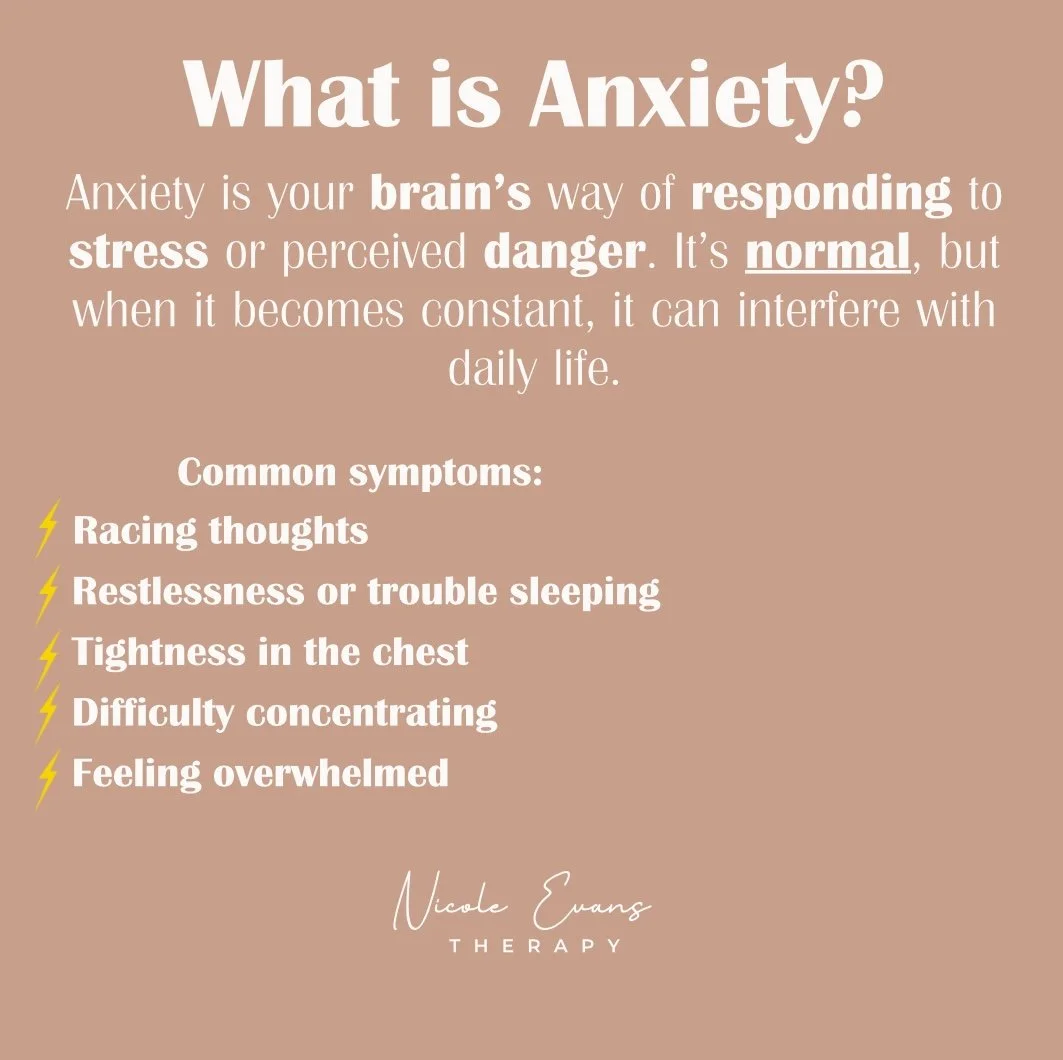
Anxiety is a natural response to stress or perceived danger. It’s your brain’s way of preparing you for potential threats—sometimes called the “fight or flight” response. While this can be helpful in certain situations (like preparing for a big presentation or reacting quickly to danger), persistent anxiety can interfere with daily life.
Common symptoms of anxiety include:
• Racing thoughts or excessive worry
• Restlessness or trouble sleeping
• Increased heart rate or tightness in the chest
• Difficulty concentrating
• Feeling overwhelmed or easily irritated
If you experience these symptoms frequently, you may be dealing with chronic anxiety. While occasional stress is normal, ongoing anxiety can negatively impact your health, relationships, and overall quality of life. That’s why learning how to manage it is so important.
The Root Causes of Anxiety
Anxiety can be triggered by many factors, including:
1. External Stressors
Work deadlines, financial pressure, relationship conflicts, or major life changes (like moving or starting a new job) can all contribute to anxiety.
2. Uncertainty & Fear of the Unknown
Not knowing what’s coming next—whether it’s in your career, personal life, or health—can create a sense of unease.
3. Negative Thought Patterns
When we constantly imagine worst-case scenarios or doubt our ability to handle situations, anxiety can spiral out of control.
4. Past Trauma or Unresolved Emotions
Anxiety can also stem from past experiences. If you’ve experienced trauma or prolonged stress, your nervous system may be more sensitive to potential threats.
The key to managing anxiety is recognizing what triggers it and implementing strategies to reduce its impact on your daily life.
7 Practical Strategies to Manage Anxiety
1. Practice Deep Breathing
When anxiety strikes, your body shifts into “high alert” mode. Your heart rate speeds up, and your breathing becomes shallow. Deep breathing exercises help calm your nervous system and bring your body back to a relaxed state.
Try this simple breathing technique:
• Inhale slowly through your nose for a count of four.
• Hold your breath for four seconds.
• Exhale slowly through your mouth for a count of six.
• Repeat for a few minutes until you feel calmer.
This technique helps slow down racing thoughts and grounds you in the present moment.
2. Challenge Negative Thoughts
Anxiety thrives on “what if” thinking. We often imagine the worst-case scenario, even when it’s unlikely to happen.
To combat this, try reframing your thoughts:
• Ask yourself: Is this thought based on facts or fear?
• Replace catastrophizing thoughts with more balanced perspectives.
• Remind yourself of past challenges you’ve overcome.
For example, instead of thinking, I’ll never get this done on time, shift your mindset to, This is challenging, but I can break it down into smaller steps and make progress.
3. Prioritize Sleep & Nutrition
Lack of sleep and poor nutrition can worsen anxiety. When your body is exhausted or lacking essential nutrients, your ability to cope with stress decreases.
To improve sleep:
• Set a consistent bedtime.
• Avoid screens before bed.
• Practice relaxation techniques like reading or stretching before sleep.
For better nutrition:
• Eat balanced meals with protein, healthy fats, and complex carbs.
• Reduce caffeine and sugar, which can trigger anxiety spikes.
• Stay hydrated—dehydration can increase stress levels.
4. Engage in Regular Physical Activity
Exercise is a powerful way to reduce anxiety. Physical movement helps release tension, boost endorphins, and regulate stress hormones.
You don’t need an intense workout—just 20–30 minutes of movement a day can make a difference. Try:
• Walking or jogging outdoors
• Yoga or stretching
• Strength training or dancing
Find an activity you enjoy and make it part of your routine.
5. Create a “Calm-Down” Toolkit
Having a go-to list of calming activities can be a game-changer when anxiety strikes.
Your toolkit might include:
Listening to soothing music
Journaling your thoughts and feelings
Engaging in a creative hobby (painting, writing, etc.)
Practicing progressive muscle relaxation (tensing and relaxing different muscle groups)
Using grounding techniques, like holding a warm cup of tea or focusing on textures around you
When you feel anxiety building, turn to your toolkit for quick relief.
6. Set Healthy Boundaries
Anxiety often increases when we take on too much. Learning to say “no” and setting boundaries can protect your mental well-being.
• Limit time spent on social media if it increases stress.
• Avoid overcommitting to obligations that drain your energy.
• Surround yourself with supportive people who respect your needs.
Give yourself permission to prioritize your well-being without guilt.
7. Seek Professional Support When Needed
While self-care strategies can help, therapy provides deeper insight into your anxiety and coping mechanisms. Working with a therapist can help you:
• Identify and change anxious thought patterns
• Develop healthier coping strategies
• Work through past trauma or unresolved stressors
If anxiety is interfering with your daily life, professional guidance can make a huge difference.
Embracing a Calmer, More Balanced Life
Anxiety doesn’t have to control your life. By incorporating these strategies—breathing exercises, reframing negative thoughts, prioritizing self-care, and seeking support when needed—you can take back control and create a sense of calm.
If you’re struggling with anxiety and want personalized support, I’m here to help. Therapy can provide the tools you need to manage stress, improve your mindset, and build resilience.
I offer therapy services in Texas, California, and Colorado. Visit nicoleevanstherapy.com to learn more or schedule a session.
You don’t have to navigate this alone—help is here when you’re ready.
Topic of the Week:
The Power of Therapeutic Boundaries—How to Protect Your Peace and Well-Being
Written by Nicole Evans, February 17, 2025
Setting boundaries is an essential act of self-care. They define what is acceptable and what isn’t in your relationships, ensuring that your emotional, mental, and physical well-being remain protected. Yet, many people struggle with setting boundaries—whether due to guilt, fear of conflict, or not knowing where to start.
Therapeutic boundaries help create healthy, balanced relationships with yourself and others. They allow you to show up authentically, without resentment or burnout. If you’ve ever felt overwhelmed by others’ expectations, drained from always saying “yes,” or unsure how to advocate for your needs, this guide is for you.
What Are Therapeutic Boundaries?
Therapeutic boundaries are limits you set to protect your emotional health while fostering respectful and meaningful connections. They help define:
Your emotional and physical space (How much access others have to you)
Your time and energy (What you commit to and prioritize)
Your personal values and needs (What is important to you)
Boundaries are not about controlling others—they’re about honoring yourself. When you set boundaries, you communicate how you want to be treated, what you will tolerate, and what you need to feel safe and respected.
How to Set Healthy Boundaries
1️⃣ Identify What You Need
Pay attention to situations that leave you feeling drained, resentful, or overwhelmed. These feelings are often signs that a boundary is needed. Ask yourself: What do I need to feel safe, supported, and respected?
2️⃣ Communicate Clearly and Compassionately
Boundaries don’t need to be harsh or rigid. A simple, direct statement is often enough. Try:
“I need some alone time after work before making plans.”
“I appreciate your advice, but I need to make this decision on my own.”
“I can’t take on extra tasks right now, but I’d love to help in the future.”
3️⃣ Be Consistent
Boundaries lose their power when they’re inconsistently enforced. If someone repeatedly oversteps, reinforce your boundary with calm but firm reminders.
4️⃣ Release Guilt
It’s okay to say no. It’s okay to prioritize your well-being. Setting boundaries isn’t selfish—it’s necessary. When you take care of yourself, you show up as your best self in relationships.
5️⃣ Know When to Walk Away
If someone consistently disrespects your boundaries, it may be time to reassess the relationship. Healthy connections are built on mutual respect and understanding.
Embracing Boundaries as Self-Care
Boundaries aren’t walls to shut people out—they’re bridges to healthier relationships. They help you honor your needs, protect your energy, and cultivate deeper, more fulfilling connections.
If you struggle with setting boundaries, therapy can help you build the confidence and tools to protect your well-being. You deserve relationships that respect and support you.
📍 Serving clients in Texas, California, and Colorado.
📩 Visit nicoleevanstherapy.com to schedule a consultation.